
Training notes
How to choose an indoor cycling bike for home
Choosing an indoor cycling bike is the question we get more than any other, so here is the short version from our team: buy for the heaviest rider, the tallest inseam and the hour you plan to ride. Everything else follows.
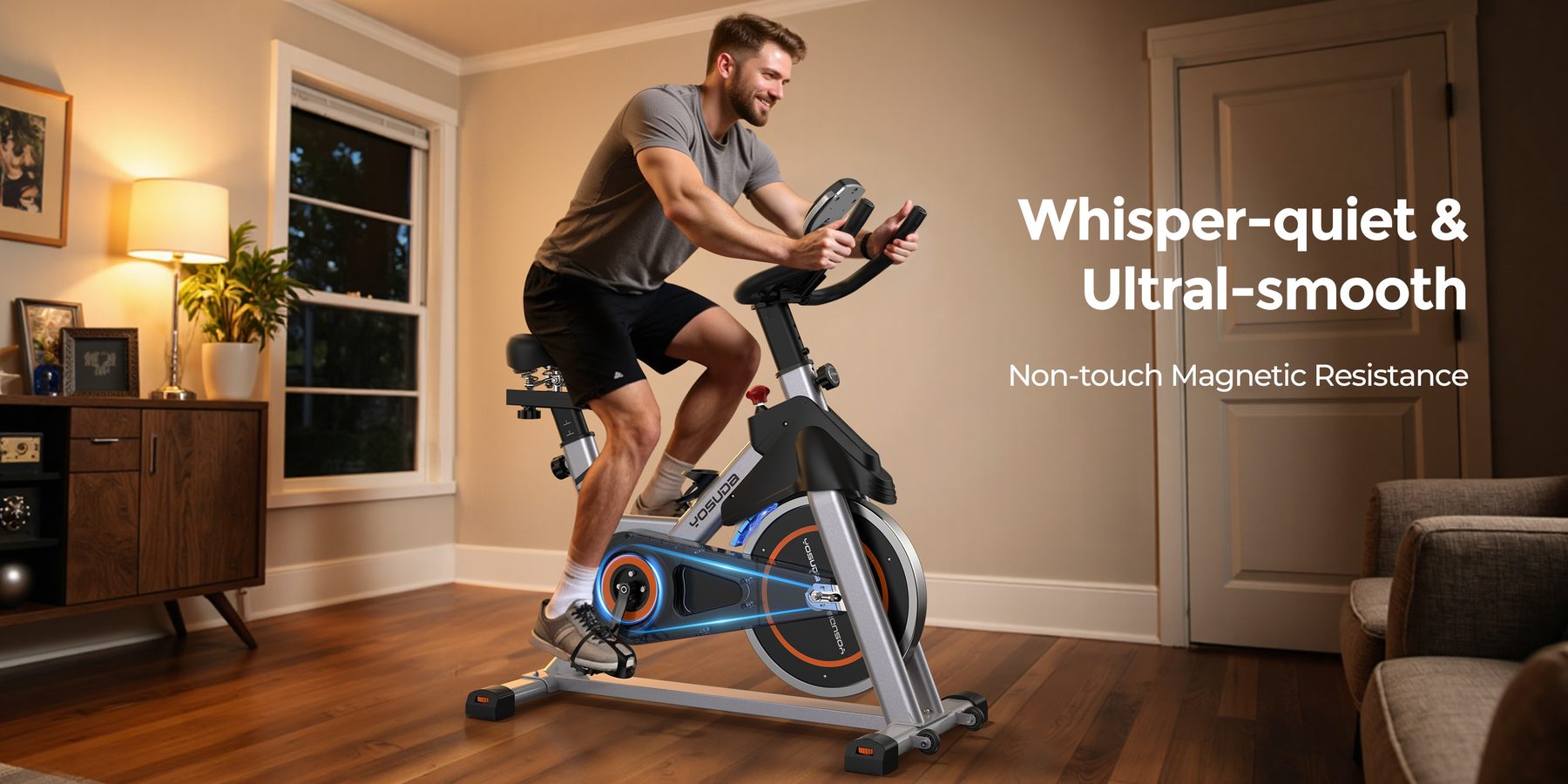
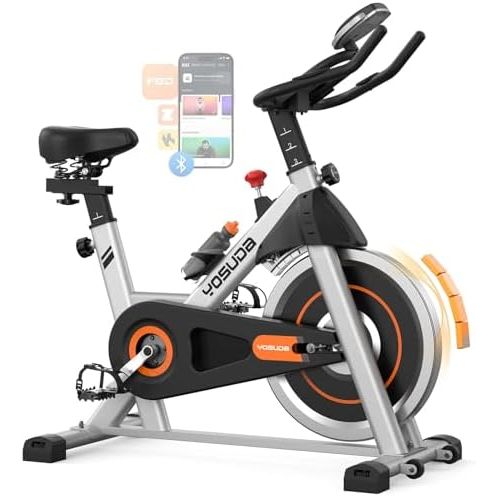
YOSUDA Magnetic Exercise Bike 002C
Our best-known upright bike: a 25 lb flywheel, a 20dB magnetic drive and a seat that slides four ways.
$269.99
1. Weight capacity first
Our uprights are rated 300 lb (002C, L-002C Pro), 350 lb (PRO L-010C, air bike) and 400 lb (L-007C). Recumbent bikes carry 350 lb; folding bikes 270 to 380 lb. A higher rating usually also means a heavier, steadier frame.
YOSUDA Magnetic Exercise Bike 002C
Our best-known upright bike: a 25 lb flywheel, a 20dB magnetic drive and a seat that slides four ways.
$269.99
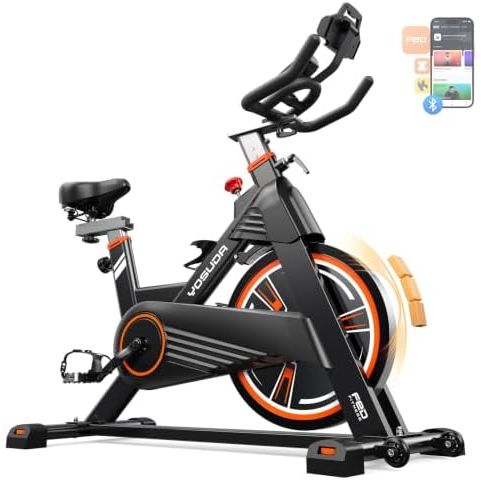
YOSUDA PRO Magnetic Exercise Bike L-010C
Thick commercial-grade steel, a 35 lb flywheel and 100 micro-steps of resistance for riders up to 350 lb.
$329.99
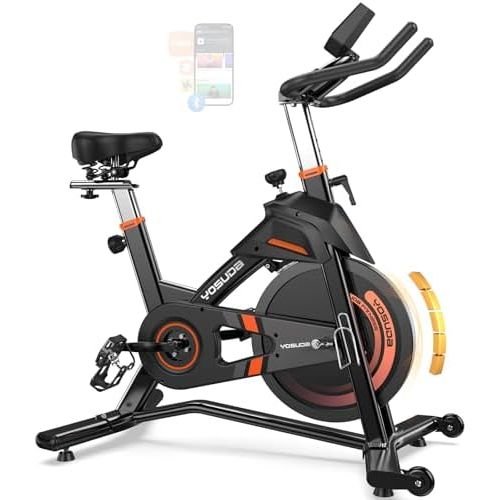
YOSUDA Light Commercial Exercise Bike L-007C
Curved stabilizers, a 400 lb rating and a 50 lb flywheel for riders who want gym weight at home.
$499.99
2. Flywheel weight and resistance
Flywheel weight decides how smooth the stroke feels: 25 lb on the 002C, 35 lb on the PRO, 40 lb on the high-end spin bike and 50 lb on the L-007C. Magnetic resistance is contactless and quiet; friction pads cost less but make more noise and wear over time. The PRO and L-007C split resistance into 100 micro-levels.
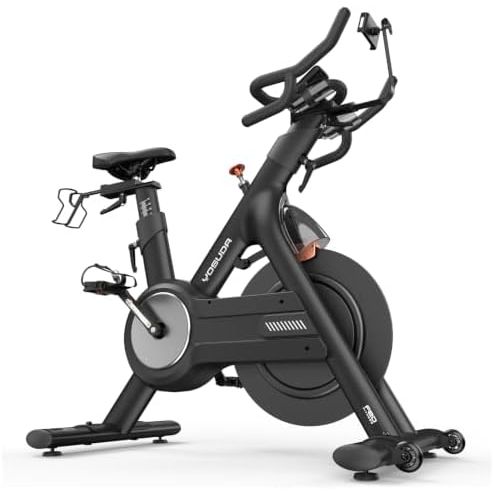
YOSUDA High-End Magnetic Spin Bike
Dual-side magnets, a 40 lb flywheel and a watts-reading console for training that is measured, not guessed.
$899.99
3. Your height and the seat
Four-way adjustable seats and bars on our uprights fit riders from 4'8" to 6'2" or 6'4". If long rides hurt, the L-002C Pro has a wider dual-spring seat; if your back needs support, choose a recumbent.
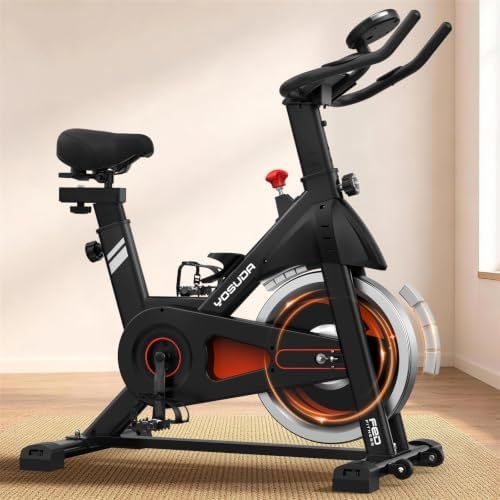
YOSUDA Magnetic Exercise Bike L-002C Pro
A wider, thicker seat on dual springs, 0-100 seamless resistance and six ways to set the saddle.
$279.99
4. Space
Folding bikes give the floor back: the 5-in-1 folds flat and the X-Bike weighs 30 lb. Full-size uprights need roughly 40 to 50 inches of length.
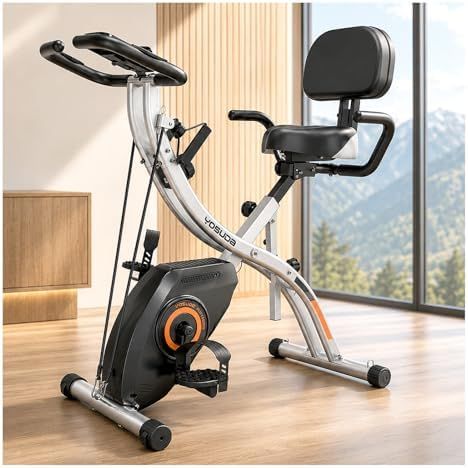
YOSUDA 5-in-1 Folding Exercise Bike
Upright, semi-recumbent, recumbent, rowing pulls and band work in one bike that folds flat.
$159.99
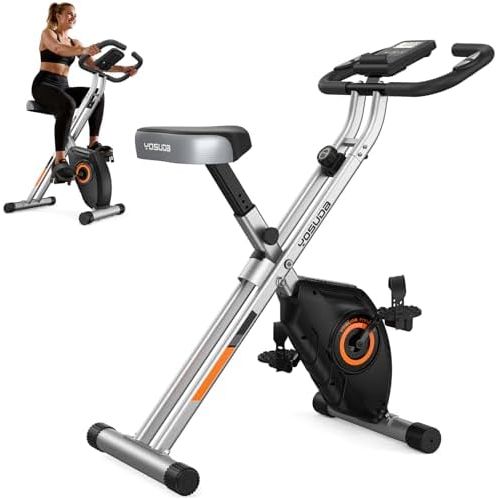
YOSUDA 2-in-1 Folding Magnetic X-Bike
A pin-fold X-frame with eight magnetic levels, a broad 12.8-inch seat and a pulse-reading computer.
$149.99
5. Screens and apps
Every model has a monitor. Bluetooth connects our exclusive app, Kinomap, Zwift or FED Fitness. For interval training, the air bike's console runs 10/20 and 20/10 presets.
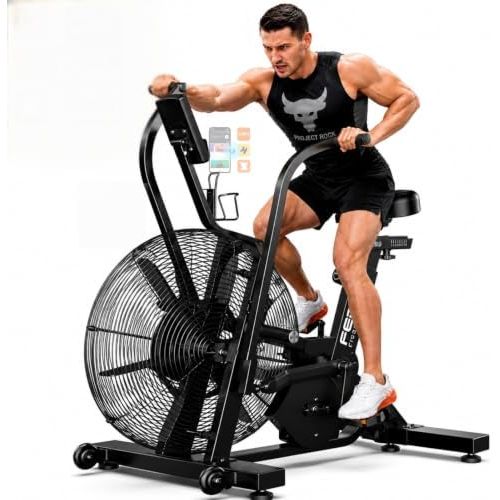
YOSUDA Dual-Drive Smart Air Bike
A 13.6-inch steel fan that pushes back as hard as you do, with arms and legs working together.
$599.99
6. Indoor cycling bike or recumbent bike?
An upright indoor cycling bike puts you over the pedals like a road bike, so you can sit, stand and sprint; it gives the most studio-like cycling workout. A stationary recumbent bike leans you back against a seat, which many riders find more comfortable for long, low-impact cardio and for health goals after an injury. If two people with different needs share the room, the 5-in-1 folding bike rides both ways.
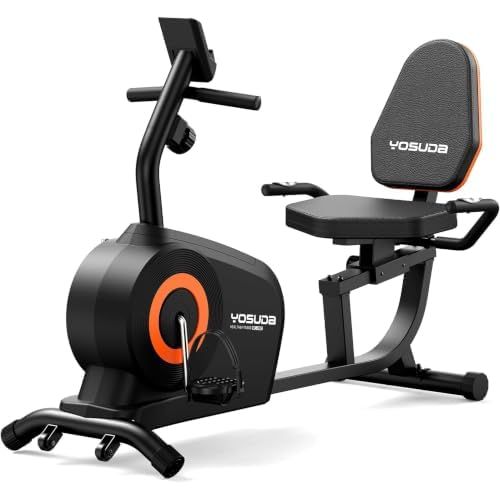
YOSUDA Compact Recumbent Exercise Bike
A 45-inch recumbent with a knob-set seat, 16 levels up to 60 lb and a frame rated for 350 lb.
$179.99
7. What a studio-style ride needs at home
A studio indoor bike feels the way it does because of three things: a heavy flywheel for momentum, resistance you can change in small steps, and a frame that does not sway when you stand. On our machines that means a 35 lb or heavier flywheel, 100 micro-levels or 32-load magnets, and a commercial-grade steel frame. Add a tablet holder and a guided class, and the experience at home is close to the gym, without the drive.
8. Fit check before you choose
Measure your inseam and compare it with the listed range, then check the rider height on the machine page: 4'8" to 6'2" on the 002C, 4'8" to 6'4" on the PRO, 25 to 36 inches of inseam on the L-007C and 4'7" to 6'7" on the air bike. Comfortable cycling also depends on handlebars you can raise, so riders with back stiffness should look for four-way adjustment.
9. Noise, floors and apartments
Magnetic resistance is the quiet choice for an indoor bike in an apartment. Put the bike on a mat to protect the floor and soften vibration, keep it level, and you can ride early or late. Air bikes are the exception: fan resistance is part of the fun, and part of the sound.
10. Our short list
Everyday riders: the Magnetic Exercise Bike 002C. Tall or heavy riders and daily trainers: the PRO L-010C or the L-007C. Power-based training: the high-end spin bike. Whole-body HIIT: the air bike. Small spaces: the 5-in-1 folding bike. Joint-friendly cardio: a recumbent. Each of these YOSUDA machines is built to be ridden for years, not to collect laundry.